
Unusual Pursuits
These days there is much discussion about the importance of post–secondary school education and the value of a college degree. Stories about graduates from almost any college who are discovering their career paths always seem to involve intriguing twists and turns before the direction becomes clear. As life circumstances and opportunities come into focus, best-laid plans often readily morph. Many Berklee alumni earn their degrees and then find themselves on a trajectory that leads toward an area of music they hadn’t considered but that proves satisfying. For others, the path leads away from music and to fields in which they never pictured themselves.
The stories of the alumni presented below include those of two who stayed in music—one as a music therapist the other a conductor—as well as two graduates who follow careers as an orthodox Jewish rabbi and a playwright. The thread running through their stories, though, is a continued love for and belief in the meaningfulness of music.

Former Guns ‘n’ Roses drummer Matt Sorum (far left) and music therapist Rebecca Vaudreuil ’08 work with returning U.S. military veterans experiencing PTSD.
For millennia, people across the globe have turned to music to experience its extraordinary ability to lift and inspire. But only in the early decades of the 20th century did the powers of this ancient art form begin to receive scientific scrutiny and formal implementation for medical benefit. Early practitioners of music therapy worked with military personnel who had returned home from World War I bearing the physical and psychological scars of war. A century later, board-certified music therapist Rebecca Vaudreuil ’08 is involved in cutting-edge efforts with music to help U.S. combat veterans suffering from post-traumatic stress disorder (PTSD) after returning from Iraq and Afghanistan.
“These veterans often have a different set of challenges accompanying their PTSD,” explains Vaudreuil, who has treated more than 500 people with the disorder. “Because their incidents are so recent, their symptoms are more acute. For example, injuries caused by improvised explosive devices [IEDs] create a different type of trauma from, say, chemical [weaponry] used in earlier wars. Also, these veterans continue to lose people close to them because their fellow servicemen and women are still overseas.”
After graduating from Berklee in 2008, Vaudreuil began working with vets when she relocated to San Diego, California. Her internship at MusicWorx Inc., where she worked at a neurologic rehabilitation center among other facilities, led to a position with Resounding Joy Inc., a nonprofit music therapy organization where she developed a military outreach program for veterans in San Diego. “In 2010, we began with a music-wellness pilot program at the Naval Medical Center San Diego,” she explains. “Recently returned veterans learned how to use music in their daily lives to relieve pain and anxiety and as a vehicle for self-expression.”
The following February, the program expanded to include veterans from Naval Base Point Loma in a residential program to help those struggling with PTSD and substance abuse. The music therapy sessions are a mandatory part of their rehabilitation. Vaudreuil began similar work with veterans of the Wounded Warrior battalion at the Marine Corps Base Camp Pendleton in Southern California. Her work has recently been expanded in the U.S. Department of Veterans Affairs system, where music therapy sessions are being introduced for the first time at this VA location in the Spinal Cord Injury and Disorders Department.
The sessions can be individual or in groups that include veterans and/or their families. Vaudreuil creates an atmosphere where veterans feel safe and free to explore ways to deal with their trauma through music. “There’s no typical session,” Vaudreuil explains. “With some veterans, I might use guitar with easy-to-play open tunings, for others we might use light drumming or singing sessions using songs they know and love. Others may have had oral motor damage due to an IED explosion, and we use techniques like humming or deep breathing exercises to help them rediscover their voices.”
“Everything Changed”
Vaudreuil also leads songwriting workshops that provide veterans an outlet for sharing their combat experiences. This effort attracted the attention of Matt Sorum, the former drummer for Guns ‘n’ Roses and Velvet Revolver. “Matt was so moved that he invited veterans to his studio to record their songs and helped them produce CDs for their families and friends.” Sorum has also donated a number of instruments to the program.
Live performances of this material gained the attention of yet another music celebrity, Tim McGraw, who sang with veterans at a Camp Pendleton performance. Vaudreuil explains, “The Tug McGraw Foundation was created in honor of Tim’s father, Tug. It provides support for active service members and veterans with PTSD and traumatic brain injury. The soldiers perform the songs live, and the music serves as a vehicle for camaraderie with other veterans in the audience.”
While the work can be challenging and stressful, Vaudreuil is quick to hail its rewards. “Music can’t make the pain disappear for these people,” she says, “but their perception of the pain is certainly diminished. Musicians know that music is an important creative outlet. For these veterans, it offers a profound level of healing.” In the case of one veteran, Mack Nunsuch III, it has literally been a lifesaver. “Prior to this, I felt completely hopeless. After music therapy, everything changed. It gave me the chance to express feelings I had bottled up. Music therapy is saving my life.”

Rabbi Avaraham Chachamovits ’86
Rabbi Avraham Chachamovits has followed a career path that’s distinctly different from that of most Berklee alumni. “Some people don’t change that much throughout their lives,” Chachamovits says, “but I have had three different phases in my life.” His path has led him to leave his home in São Paulo, Brazil, to study music both at Berklee and in Miami to working in the high-tech industry to becoming an orthodox Jewish rabbi in São Paulo. After earning his Berklee degree in composition in 1986, Chachamovits pursued a master’s degree at Florida State University in composition. Along the way, he had discovered his aptitude for technology and added a minor in computer science to his grad studies.
He subsequently worked for years in the high-tech industry starting in music software development and later in artificial intelligence and telecommunications. He did projects for Juilliard, Apple, and others before becoming the director of technology for Bell South/Safra Corp and later, vice president of technology and CIO for Sprint-Nextel Corporation.
But then, a dozen years ago, a life-changing experience steered him toward his spiritual pursuits. “I’d been living in Miami for nine years, and in 1997, my parents had come from Brazil to see me,” Chachamovits recalls. “During their visit, my father had a stroke right in front of me and it really shook me.” His father survived the stroke, but the episode gave Chachamovits a different perspective. A few years earlier, he had been feeling a tug back toward his Jewish roots, now he felt more urgency.
“In Judaism, they say when the student is ready, the master appears,” Chachamovits says. “The fact that I had other backgrounds has helped to make things more colorful and significant.” He decided to become an Orthodox Jewish rabbi and began studies with rabbis from the Yeshiva Chofetz Chaim and renowned kabbalist Rabbi Yitzchak Ginsburgh. “I didn’t know then that I would go much further with this than I had in music or science and technology,” he says. “Also, I didn’t think I would ever return to Brazil.”
A short time after his parents’ visit, Bell South contacted Chachamovits because the company planned to introduce its broadband cellular phones to the Brazilian market. “They needed a director of technology and made me an offer I couldn’t refuse.” He moved back to his native São Paulo in 1998. By 1999, though, he left the high-tech business to concentrate on his rabbinical work. Chachamovits, does not lead a traditional congregation at a synagogue, he ministers by writing and teaching and has produced 300 works (books, audio, and video productions) that share his views on the mystical dimensions of the Torah (the first five books of the Jewish Bible).
“I teach small classes at night, but I also do virtual classes on the Internet and have a community of tweeters. With my background in technology, the Internet has become a tool with which I can communicate with people. So I have students around the world, both Jewish and non-Jewish. I teach non-Jewish students about the seven laws of Noach.” (Visit http://nahardinur.blogspot.com.br for a sample of his teachings in English.)
Return to Music
After a long hiatus, Chachamovits returned to writing music recently. “In 2010, I wrote a piece for violin and piano and was suddenly filled with inspiration and a desire to compose,” he says. He has since written chamber pieces and a symphony, among other works. His strongest musical influences come from early-20th- century composers. The music of Czech composer Leos Janácek was of particular interest during his youth.
Thus far it’s been hard to line up performances of his works, so Chachamovits uses Finale and the Garritan orchestral libraries to realize his music and posts it online (www.avrahamchachamovits.mus.br/ComposeIG.asp). “SoundCloud allows me to be heard by the whole world,” he says. “People in Japan, China, Russia, Germany, France, and America follow my music.”
Many people don’t associate the sounds they hear with Chachamovits’s image. He sees this as an opportunity, an intersection of his music and spiritual goals. “Some hear my music on SoundCloud and see a picture of an orthodox rabbi, and it doesn’t fit their conception of a contemporary composer. I feel it’s my mission to break down silly prejudices that keep people apart.”
Building the Podium
French-born conductor Christophe Chagnard ’89 was studying at École des Beaux-Arts in Paris (hoping to become a graphics artist) and playing a little rock guitar on the side when a trip to the United States changed his course. “I always had a fascination with the U.S.—American freedom, culture, and entrepreneurial spirit,” Chagnard says. “I had this feeling that if I came to America, my life would change forever—and that’s what happened.”
During a 1982 visit to New York to see his father, the two drove to Boston to visit a friend. Aware of his son’s interest in music, the senior Chagnard dropped him off at Berklee to explore for a few hours. “I was struck by the diverse student body and the many styles of music being played there,” Chagnard says. “My father suggested that I consider studying at Berklee, but that seemed impossible to me.” Chagnard played only by ear and couldn’t read music. But after months of intense study, he developed his music reading and theory skills enough to be admitted to Berklee in the fall of 1983.
“I got interested in composition, and that led me very quickly to conducting,” he says. Outside of school, Chagnard became an assistant conductor for the Brookline Symphony and Arlington Philharmonic orchestras. Those experiences taught him about rehearsal techniques and a conductor’s need for people skills. Chagnard earned his bachelor’s and master’s degrees in composition from Berklee and New England Conservatory, respectively. Within a few years, he was teaching at Berklee and serving as music director for the New England String Ensemble.
Enter Kathryn Habedank, an organ student whom Chagnard met at NEC and for whom he’d conducted before she returned to her home in Tacoma, Washington. In 1991 Habedank offered Chagnard an opportunity. “Kathryn called and asked if I would be interested in conducting a concert in Tacoma in 1991. She wanted to assemble a group of freelance players for a program marking the bicentennial of the death of Mozart.”
Chagnard accepted the offer and conducted a hugely successful all-Mozart program. “The players and I were making music well instantly,” he says, “so the next summer I returned to conduct another concert.” Habedank and Chagnard resolved to formally establish the 35-piece chamber orchestra as the Northwest Sinfonietta with Chagnard as music director. After two years of flying from Boston to Seattle for rehearsals and concerts, he decided to leave the East and relocate to the West Coast and give the nascent orchestra a go.
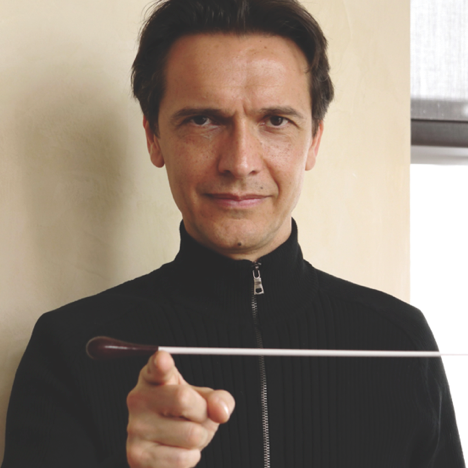
Orchestra founder and conductor Christophe Chagnard ’89
The logistics of building the orchestra presented a nonmusical education for Chagnard. “I helped with mass mailings, fundraising, media relations, and working with patrons,” he says. “I’ve been involved in every part of managing the orchestra—short of accounting.” For several years, Habedank and Chagnard handled all of the business. “In the beginning, I spent a lot more time doing administration than conducting. But that was very important for me. I now understand orchestra management from every angle. I’m not in an artistic cocoon.”
The Northwest Sinfonietta has since hired an administrative staff. Critics hail them as the top chamber orchestra in the Northwest for their performances of classical masterworks and for bringing in top soloists such as cellist Lynn Harrell, violinist Nadja Salerno-Sonnenberg, clarinetist Richard Stoltzman, and guest conductor Gerard Schwarz. Chagnard also breaks new ground by premiering works by contemporary composers. “It’s very important to promote living composers,” Chagnard emphasizes. “We’ve done that throughout our 22 seasons.”
With the orchestra well established, Chagnard is revisiting earlier passions: composing and playing the guitar. In 2010, the orchestra premiered Opre Roma!, a Gypsy-jazz inspired work Chagnard penned that featured him and two other guitarists. (Hear it at www.youtube.com/watch?v=cneg3tvCEOk&feature=relmfu.) His new composition, Embargo, will debut this season and feature guest musicians from Cuba.
When not on the podium with Northwest Sinfonietta, Chagnard performs with his Gypsy jazz sextet Touché and makes appearances as a guest conductor. He’s represented by Parker Artists and has led orchestras in Russia, Cuba, and Japan.
“When I step onto the podium, I feel humbled and immensely grateful for the opportunities that I’ve been given. Starting an orchestra and sustaining it for 21 years has been an incredible adventure and is very much in keeping with the American spirit. When I return to Europe and people ask me if America is still a land of opportunity, I say ‘absolutely.’ I wake up with that feeling every day.”
Drama King
Gerald Sibleyras ’84, another Paris native, grew up playing guitar and came to Berklee to become a more well-rounded musician. As events unfolded, he chose to major in MP&E believing that his father would be more pleased if he held the title of engineer rather than performer. “I was very happy studying at Berklee,” Sibleyras says, “but I quickly realized that I wasn’t as advanced as the other guitar players. I felt I didn’t have the talent to be a professional musician, but I enjoyed my time at Berklee.” After graduating, Sibleyras returned to Paris but didn’t look for work as either a guitarist or an engineer.
After some self-assessment, trial and error, and encouragement from a friend, he discovered that he possessed a gift for dramatic writing. Over the past two decades, Sibleyras has developed a burgeoning reputation as a playwright in Paris and beyond. His theater works have won numerous Molière awards (the French equivalent of a Tony Award) and the English-language adaptation of his play Le Vent des Peupliers (The Wind in the Poplars) has been staged as Heroes throughout Europe, the Middle East, America, and Australia. Heroes is Sibleyras’s most successful work to date, and the work won a prestigious British theater prize, the Laurence Olivier Award. Additionally, a number of his original scripts and French-language adaptations of plays and novels by American and English authors have been produced for the stage and silver screen.
Sibleyras’s ultimate career path wasn’t easily visible to him after he returned to Paris from Boston in 1984. He took a job as an assistant to movie makers and later began writing comedy bits for radio shows. “After I got fired from my job at the radio,” he says, “I talked with a friend and we decided to write a play. Some of the plays I’d seen weren’t very good, so we thought we’d try writing a comedy.” Sibleyras and his cowriter Jean Dell had success first time up with Le Béret de la Tortue (The Tortoise Touch), which was produced in September 2000 at Théatre Splendid Saint-Martin. A film version followed. Their second effort in 2003, Un Petit Jeu Sans Conséquence (Consequences) was a huge success in Paris, netting an astonishing nine Molière nominations and five awards. It too was adapted for film in 2004.
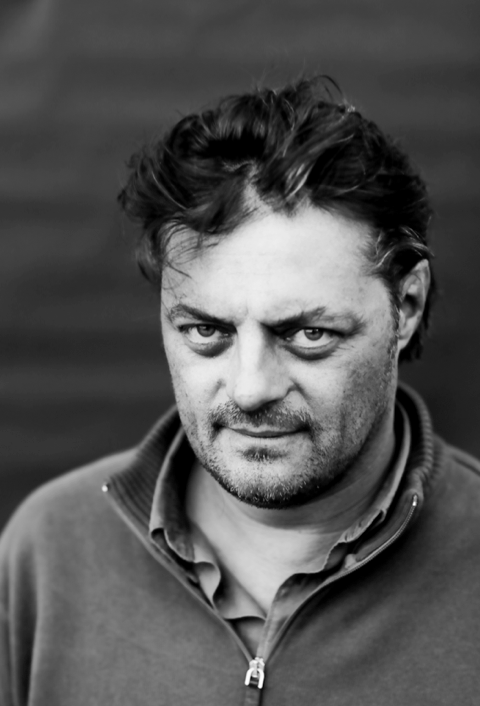
Playwright Gerald Sibleyras ’84
It was a 2003 solo effort by Sibleyras that garnered the attention of star British playwright Sir Tom Stoppard. When Le Vent des Peupliers opened in Paris in January in 2003, critics noted a maturity in Sibleyras’s writing in his skillful blend of comedic and serious—even tragic—themes. Set in 1959, the plot centers on the musings of three aging World War I veterans. Stoppard’s English adaption (titled Heroes) caught on in a big way in London’s West End in 2005 and won a Laurence Olivier Award in 2006. Heroes provided some wind in the sails for Sibleyras. He has continued to write prolifically, producing more than a dozen original titles as well as successful French-language stage adaptations of such American films as The 39 Steps (Alfred Hitchcock) and When Harry Met Sally (Rob Reiner).
Currently, Sibleyras has two new productions that will open in Paris next season, and is cultivating opportunities in London as well. “My wife is a writer also,” he says. “Last year we decided to move to London. We found a French lycée [high school] here for our children, and for the next few years, we’ll stay to see what might happen.”
Of all the productions Sibleyras has penned, none have been musicals. “I would love to work on a musical,” he says. “In Paris there have been some successful new musicals, but most productions are French translations of hit Broadway shows.” So for now, Sibleyras plans to continue writing dramatic works. Yet, after all the success he has had in theater, he still feels the lure of music. “I listen to a lot of music, he says, “and I would still love to be a musician. But I feel I have been very lucky to have had this success as a playwright. If I could still write and do some music at the same time, I would be quite happy.”