
Creating Software Instruments

All these paths are unique, and it’s likely that every other Berklee developer who isn’t featured in this story would have come from yet another angle. But what all these people have in common is that they created instruments they wanted to use but that didn’t exist. By recognizing their own needs, they filled a true void in the market.
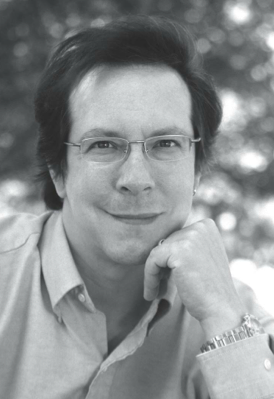
Andrew Keresztes ’86
Audiobro
LA Scoring Strings (LASS) was literally an overnight success. Among the musicians (not paid endorsees) who use this innovative sampled-string library are Danny Elfman, Trevor Horn, David Newman, John Debney, Danny Lux, and Howard Jones.
And it’s the work of Andrew Keresztes ’86. For about six years, Keresztes worked in Boston after graduating from Berklee, at first playing guitar in a band. But toward the end of that time, he applied his Berklee training in synthesis and arranging and landed jobs scoring TV commercials.
That taught him to become adept at writing for picture, and he moved to Los Angeles. He proceeded to establish a company, Detox Music, with his office and studio in a building in downtown Santa Monica.
Keresztes began working on an increasing number of television shows. At the same time, after the start of the new millennium, the advertising industry began going into decline. So he decided to put commercials on the back burner.
Rather than continuing the time-consuming commute to Santa Monica, and with little need to have face time with advertising clients in the office, he moved his studio to his home. The work kept flowing with Sabrina the Teenage Witch; documentaries for the History Channel, the Discovery Channel, and the Learning Channel; The Dog Whisperer; Walker, Texas Ranger; projects for Lions Gate Entertainment, HBO, NBC, and Fox; and some animation features. It was a wide assortment of shows.
On one project, the director requested a lush, romantic sound in the same vein as John Williams’s score for Schindler’s List. Keresztes became quite frustrated with having to make excuses for the sound of his MIDI mock-ups. “The existing string libraries just couldn’t produce that wonderful expressive legato writing,” he says. “And God forbid you try to write a melody for the violins.”
That was the impetus for LASS. Keresztes formed a new company, Audiobro, to produce the library. It took about a year and a half from beginning to end.
Having worked on more than one private sample library in cooperation with other composers, Keresztes learned how to do some fairly advanced programming and scripting in Native Instruments’ Kontakt sampler. He first tested his ideas for the string library with some quick recordings of a solo violin. When that worked well, he knew he had the model for the library.
Each section in LASS is recorded in smaller groups with different players in each one. The violins, for example, have two groups of four players, one of eight, and a first chair. Layering them produces a more organic and interactive sound than if the entire section had been recorded at once. It also lets you create smaller ensembles, plus there’s an auto-divisi feature that divides notes in a chord between smaller, intelligently sized sections. Another LASS approach is that rather than relying on literally dozens of individual articulations to piece performances together, it makes extensive use of MIDI controls to perform the parts in real time.
LASS is now in its second major update, and the latest version includes some six months’ worth of Kontakt scripting man-hours. But as soon as LASS was released, Audiobro took off rapidly. Another Berklee alumnus, Sebastian Katz ’04, has become what Keresztes describes as a “core contributor” to the company’s products. That includes programming, advanced Kontakt scripting, and working on products in development.

Dave Fraser ’91 (left) and Neil Goldberg ’91 of Heavyocity Instruments
Neil Goldberg ’91 and Dave Fraser ’91 also worked on TV commercials before forming Heavyocity Media, their software instrument company. The Heavyocity instruments are electronically processed loops and musical effects that fit together, so you can use them on their own or layer them to form musical beds. The company’s first product, Evolve, quickly became popular for film and television scoring because it made it so easy to come up with a quick cue. Evolve can now be heard on lots of games, and on film and television at every level.
Goldberg is a guitarist and majored in MP&E; Fraser studied synthesis and plays keyboards, and they first met while at Berklee (Fraser knocked on Goldberg’s door to borrow a wine-bottle opener). After leaving Berklee, both played and toured with bands: Goldberg with the thrash-metal band Annihilator and Fraser with Gary Richrath of REO Speedwagon fame. But they had worked on various projects together as students and continued to do so afterward.
After a couple of years, Goldberg started working at a company called Sonalysts Inc., composing and playing guitar on cartoons, regional spots, and the like for such clients as ESPN and the Discovery Channel. Shortly thereafter Fraser joined him at Sonalysts as a keyboard player and programmer, as well as an engineer.
About three years later, they both moved to Sunday Productions, a jingle house in New York. They were hired to do sound design and sound design-style underscore, and they worked on national spots for companies like Gillette, GE, and Lays.
Eventually the two became partners in their own company, Heavy Melody Music & Sound Design, which they formed to do scores for games and other media. All along they’d been amassing a custom library of sounds, and then, in 2006, Fraser got the idea to diversify by releasing a collection of the sounds as a product.
Evolve was released in 2008. It started out as a side project, but Heavyocity put some money behind advertising and marketing, and then Native Instruments picked up the distribution. James Newton Howard used Heavyocity’s sounds in his score for The Hunger Games, and other users include Bryan Tyler, Harry Gregson-Williams, and John Debney.
Goldberg puts it this way: “If you have to kick out a couple of ideas in a day, it helps to have grooves you can build upon. You need to start somewhere quickly if you get a call in the morning and need two cues by 4:00 or 5:00 that afternoon.
Meanwhile the virtual instrument venture has come full circle: One of the creative directors at game company Electronic Arts knew of the Heavyocity products and hired the company to work on Need for Speed, and then Shift 2 Unleashed.

Al Joelson ’02
Al Joelson ’02 has gigged a whole lot on guitar, bass, and sax, but his career in the music software industry was more linear than the route traveled by other alumni. It started while he was at Berklee completing his degree studying music technology, when he picked up a temporary job for the holiday season at Internet retailer Music Studio Direct
Joelson was hired to pack shipments, but the company was getting more calls than it had people to answer them, so he started picking up the phone. One thing led to another, and the temp job became permanent after he finished at Berklee, he was assigned increasingly more responsibility at the company. It wasn’t long before he started handling purchasing, which meant he was interacting with software companies.
One of those companies, Sonic Network, saw a good thing and recruited him to be the channel manager for Sonic Implants (now SONiVOX), its music industry division. Again Joelson’s responsibilities expanded, and he began working with developers—including Berklee alumni Jason Jordan ’00 (the lead developer), Colman O’Reilly ’11, and Ishaan Chhabra ’10.
In this product planning and management role, Joelson is now credited as the executive producer on literally dozens of SONiVOX virtual instruments. Those include completing the Sonic Implants Symphonic Collection, the award-winning Anatomy and Muse virtual instruments, Playa (the first hip-hop production virtual instruments), and lots more genre-specific instruments.
Joelson has always had an eye on the big picture, and he was integral to Sonic Network’s growth to the point where they needed the support of a much larger company to exploit to its full potential all the technology they’d developed. He reached out to several candidates, including inMusic, which saw the value in the company and became the eventual owner. InMusic is the parent company of Akai, Alesis, M-Audio, Numark, and others.
Joelson has since left inMusic and is now hard at work on a project that has yet to be announced.
The Bottom Line
There are other Berklee alumni working in the music software industry, and it may well be a good career avenue. But the real subtext to the stories here is larger. Even though there’s an outside chance we all won’t become rock stars, a Berklee education has prepared them to find unique ways of contributing to the unpredictable, fast-changing music world.